Pole barn buildings are one of the most flexible and cost-effective ways to create space, whether they’re for farming, business, or personal use. The key is choosing the right type of building for how you plan to use it.
What Is a Pole Barn?
Originally built with utility poles, today’s “pole barns” use post-frame construction—a process that involves laminated wooden posts set deep in the ground to form a strong, efficient framing system. Posts, trusses, and other key components are typically prefabricated for faster, more reliable assembly on site.
This method requires no basement or continuous foundation and supports low-maintenance, energy-efficient buildings with spacious, unobstructed interiors.
For more details, check out, What Is a Pole Barn? The Difference Between a Pole Building vs. Stick Frame.
What Kind of Pole Barn Building Do You Need?
Most buyers start with the same questions:
- What size building do I actually need?
- What will this cost, and what drives that cost?
- What features should I include now vs. later?
- Which type of building fits how I’ll use it?
The goal isn’t just to build a pole barn. It’s to choose the right building for your needs today, with flexibility for the future.
Popular Types of Pole Barn Buildings
Wick pole barns are a versatile solution for a wide range of needs:
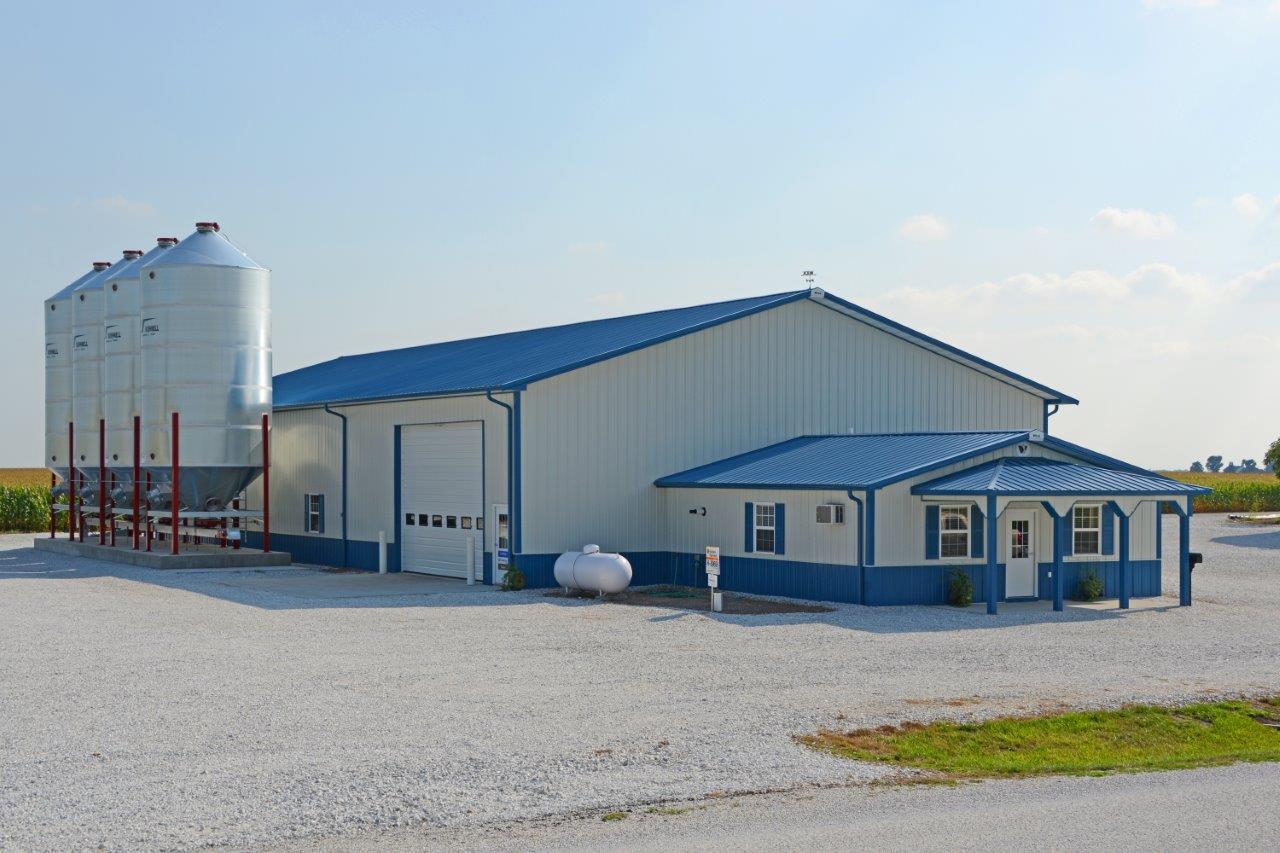
Agricultural Buildings
Designed for equipment storage, livestock, and daily farm operations.
Ideal for: Farmers and producers who need durable, high-clearance space that works as hard as they do.
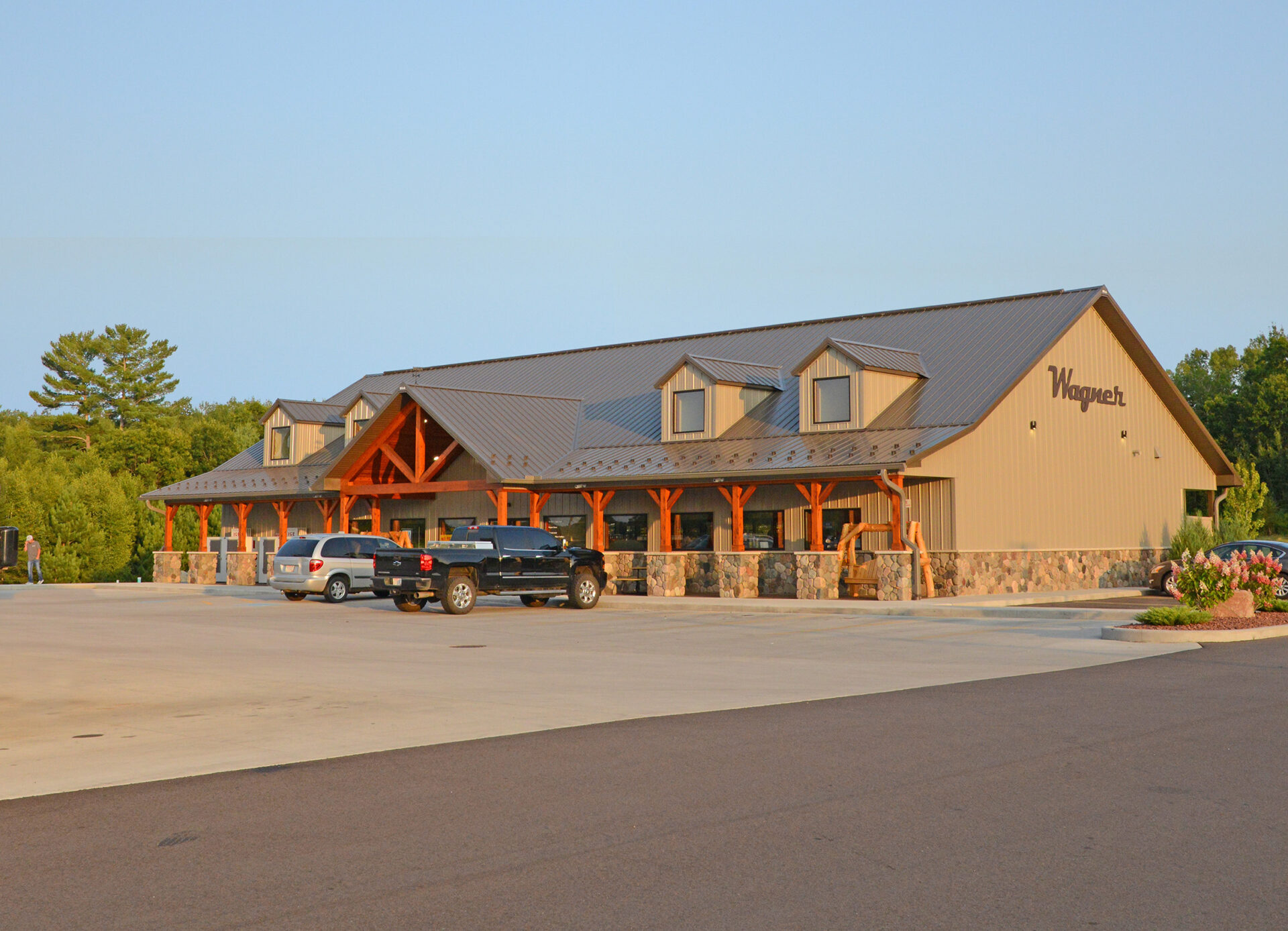
Commercial Buildings
Flexible layouts for shops, offices, warehouses, and light industrial use.
Ideal for: Business owners who need reliable space that can adapt as their operations grow.
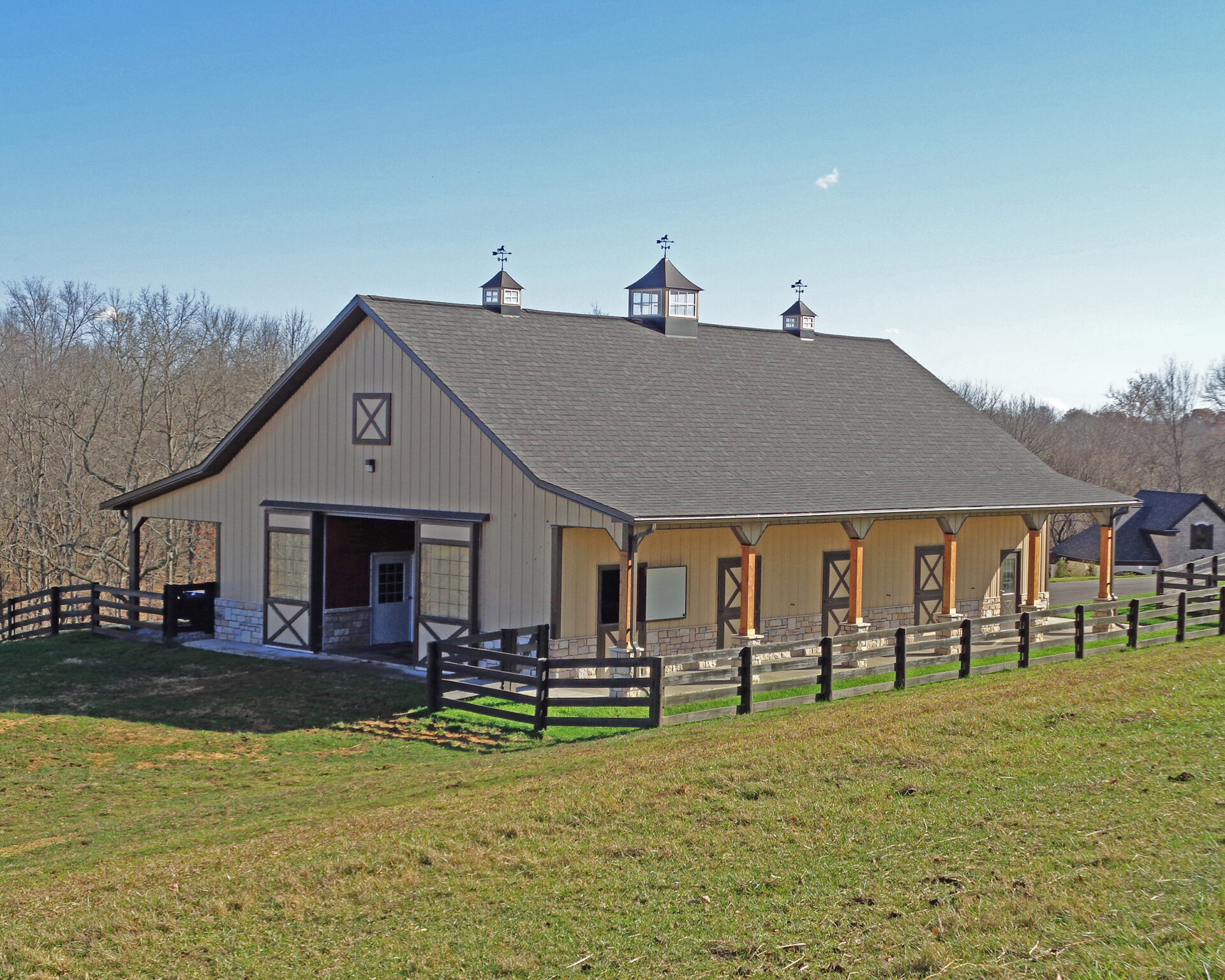
Equestrian Buildings
Built for horse safety, ventilation, and long-term use.
Ideal for: Horse owners who want a functional, comfortable environment for both animals and riders.
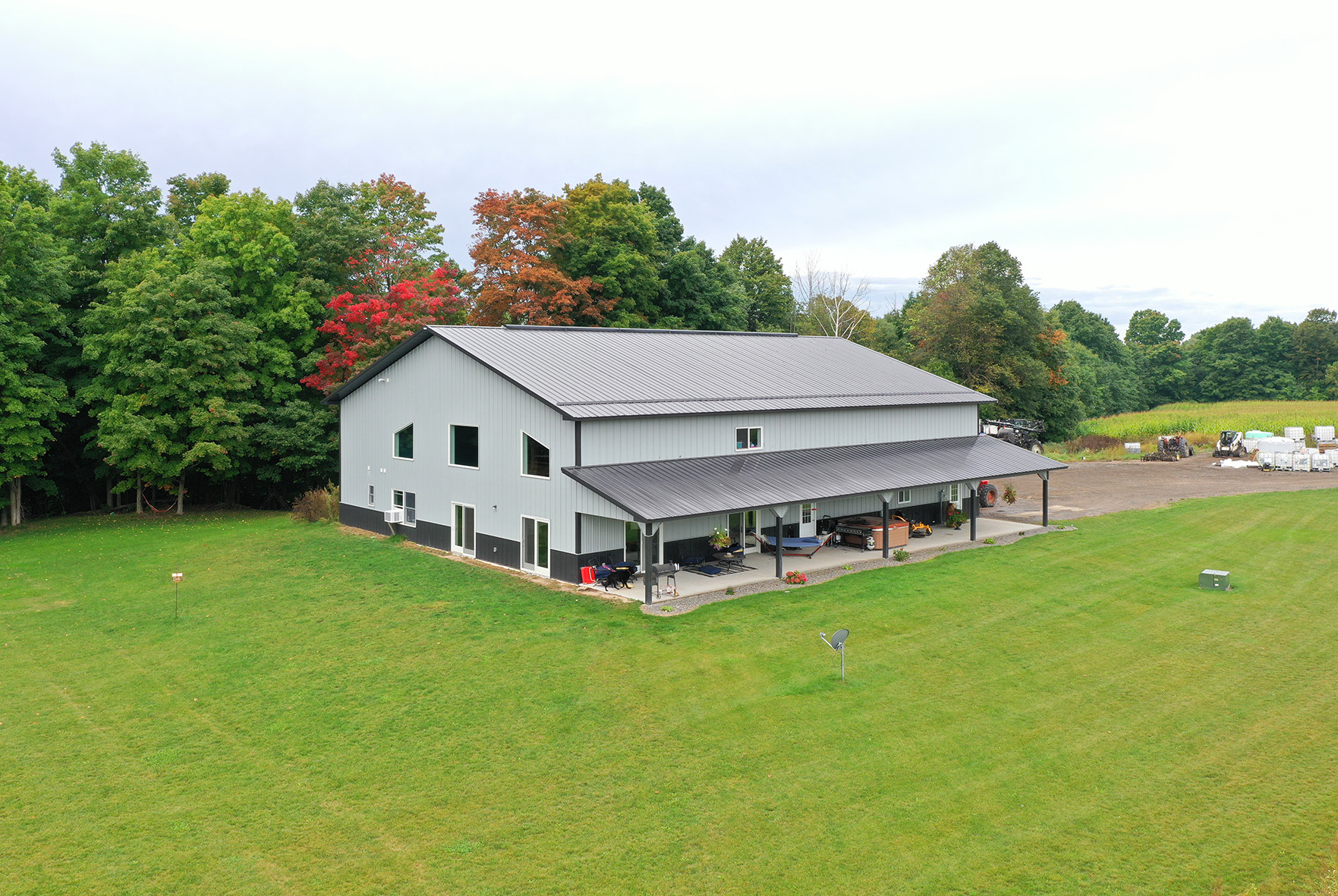
Shop Houses / Barndominiums
Combine living space with a shop, garage, or workspace.
Ideal for: Homeowners who want flexibility, space, and multi-use functionality in one building.
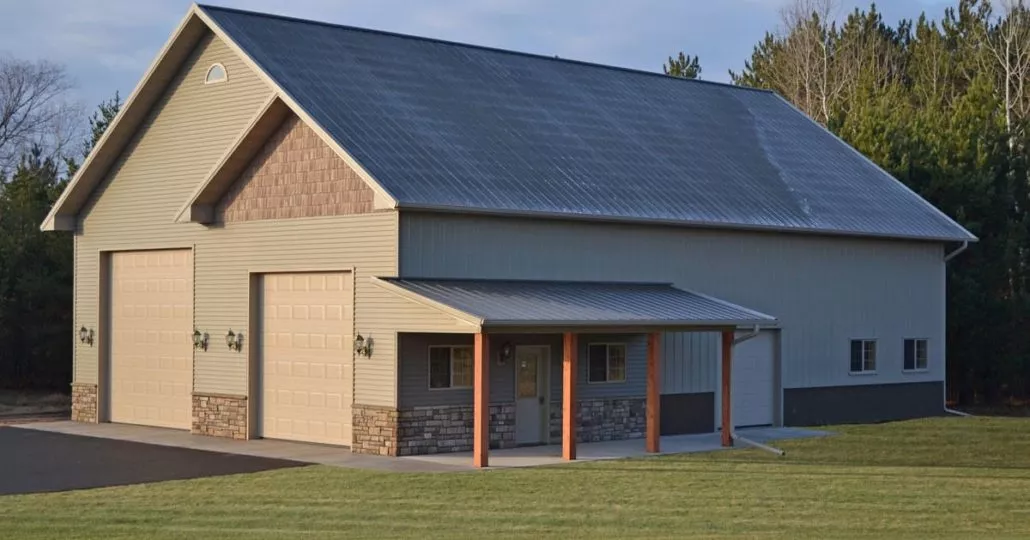
Suburban Garages & Workshops
Smaller-scale buildings for personal projects, storage, or hobbies.
Ideal for: Homeowners who want more space without sacrificing quality or appearance.
Why Post-Frame Construction Works For All These Building Types
Post-frame buildings use widely spaced columns and engineered trusses to create large, open interiors without interior load-bearing walls. This allows for faster construction, more flexible layouts, and often lower foundation costs compared to traditional building methods.
Customizing Your Pole Barn
Once you’ve chosen the right building type, you can customize it to fit your needs. Popular options include:
- Porches and overhangs
- Attic trusses for additional storage
- Interior finishes and partition walls
- Larger or specialty doors
- Additional windows and natural light
- Condensation control systems
- Exterior finishes and color upgrades
Many of these can be added later, so you don’t have to do everything upfront.
Understanding Pole Barn Costs
Pole barn costs vary because every building is different.
One advantage of post-frame construction is that it often requires less extensive foundation work than traditional buildings, which can help reduce overall project costs.
Your total investment typically includes:
- Building size (width, length, height)
- Doors and windows
- Material quality
- Site preparation and excavation
- Concrete work
- Insulation and interior finishes
- Utilities and HVAC
- Optional features and upgrades
How to Budget the Right Way
Instead of relying on cost per square foot, start with:
- Your budget range
- Your must-haves (needs)
- Your future upgrades (wants)
This approach helps you build the right structure now, without limiting your options later.
Why Wick Buildings: Choosing the Right Pole Barn Builder

The builder you choose plays a major role in how your project turns out. Factor in experience, quality, and intangible factors like great customer service. We happen to know a builder who scores high points in all three areas.
With more than 75,000 buildings constructed since 1954 across the Midwest, Wick combines proven building methods with modern engineering.
- Local builders who understand your area
- In-house engineering for your specific site and use
- High-quality materials for long-term durability
- A streamlined process from design through construction

How We Build Your Pole Barn Right
Wick constructs buildings using smart, proven techniques to help ensure customers enjoy a safe, energy-efficient, and long-lasting pole barn.
We also use materials of exceptional quality and give you options to create a pole barn that meets both your functional and aesthetic needs:
Reliable, High-Quality Lumber
To make our buildings stronger and last longer, we use only lumber that meets or exceeds machine-graded specs for all structural components, from trusses and columns to girts and purlins. In addition to the visual benefits of this cleaner lumber, it’s at least 15% stronger than regular lumber.
Durable Steel and Paint
Wick uses full-hard exterior steel, with 80,000 PSI hardness or better. This results in less dents. Our steel is also G-90 galvanized for better corrosion protection, and our paint is warrantied not to chip or crack for 40 years. Want a different finish on the exterior such as stone wainscot or a full wall? We can do that too.(See more on paint options below.)
Full Spectrum of Color Options
Wick offers 38 Sherwin-Williams colors, including Charcoal Gray, Alpine White, and Burnished Slate. Our steel panels feature WeatherXL™ coatings and optional crinkle textures for added depth and appeal. Whether you want to blend with your surroundings or make a bold statement, you’ll find a finish that lasts—backed by a 40-year paint warranty. Looking for a printed pattern like wood? We can do that too!
Superior Windows and Doors
Wick offers durable, energy-efficient windows and doors designed specifically for post-frame buildings. They feature advanced glass coatings for thermal performance and come in low-maintenance vinyl or aluminum-clad frames. Built for long-lasting reliability, these products can complement both the function and appearance of your building.
Kimberly-Clark Block-It® House Wrap Technology
Better weatherization for your pole barn home means less chance for moisture, rot, mold, and structural failure. Wick uses Kimberly-Clark BLOCK-IT® House Wrap patented construction technology that creates a breathable barrier as it prevents water penetration. You get premium protection that’s also affordable.
Smarter Pole Barn Maintenance
We design and build pole barns for long-term durability—starting with the materials. From machine-graded lumber to G-90 galvanized steel and advanced building wraps, every component is chosen to reduce wear, resist moisture, and minimize maintenance. That means less time on repairs and more time enjoying your building..
Find a Local Pole Barn Builder
Our extensive network of authorized builders means you’ll work with someone local, knowledgeable, and reliable. We have pole barn builders in the following states:

| Colorado | Illinois |
| Indiana | Iowa |
| Kansas | Kentucky |
| Michigan | Minnesota |
| Missouri | Nebraska |
| Ohio | South Dakota |
| Wisconsin |
Connect with a local builder and take the first step!
Start Your ProjectPole Barn FAQs
General Questions
What is a pole barn, and is it different from a post-frame building?
“Pole barn” is the common term that was used in the past to describe buildings constructed with poles. The modern version is called a post-frame building. Today’s buildings use engineered wood columns and trusses—not poles—making them stronger and more versatile.
Why are pole barns so popular?
Two main reasons:
- Cost-effectiveness (more building for your investment)
- Flexibility (custom layouts and future expansion)
They can be used for agricultural, residential, commercial, and hobby purposes.
What materials are used in a pole barn?
Typical materials include:
- Engineered lumber (for structure)
- Steel panels (for exterior)
- Optional insulation and interior finishes
Material quality plays a big role in long-term durability.
How long do pole barns last?
With proper maintenance, pole barns can last decades—often 50+ years. Modern materials and construction methods continue to improve longevity even further.
Can you insulate a pole barn?
Yes. Common insulation options include:
- Batt insulation
- Spray foam
- Rigid board
A house wrap or vapor barrier is often recommended to improve performance.
Can pole barns be heated and cooled?
Absolutely. Once insulated, a pole barn can be heated and cooled just like a traditional building—making it suitable for shops, offices, or living spaces.
Cost & Budget
How much does a pole barn cost?
Pole barn pricing varies based on size, height, features, location, and how you plan to use the building. Things like doors, windows, insulation, and interior finishes can all significantly impact the final cost.
The best way to get an accurate number is to start with your needs, your wants, and your budget. Then design the building around those answers.
How much does a pole barn cost per square foot?
There isn’t a reliable “per square foot” price for pole barns. Every building is customized, and small changes—like adding doors, increasing height, or upgrading materials—can shift the price quickly. Trying to apply a flat square-foot number often leads to inaccurate expectations.
What factors affect the cost of a pole barn?
Several key factors influence price:
- Building size (width, length, and height)
- Number and size of doors and windows
- Material quality (steel, lumber, insulation)
- Features like overhangs, porches, or ceilings
- Interior buildout vs. basic shell
- Site conditions and engineering requirements
The more clearly these are defined, the more accurate your estimate will be.
How can I control the cost of my pole barn project?
Start by separating your needs vs. wants. You may need a building for storage today—but want insulation, interior finishes, or a porch. The good news is many of those features can be added later.
Post-frame buildings are flexible, so you can:
- Build what fits your budget now
- Expand or upgrade in the future
That approach helps you get the building you need without overextending upfront.
What should I have ready before requesting a quote?
Three things make the process much smoother:
- A rough budget range
- A clear idea of your needs
- A list of your wants
Many buyers don’t know their budget yet—and that’s okay—but even a starting point helps guide the design and avoid mismatches.
Building Size & Layout
What size pole barn should I build?
Most people wish they had built bigger. That said, the right size comes down to what you need today—and what you realistically expect to store or use the building for.
A good approach is:
- Identify what must fit now
- Plan for future flexibility (expansion is always possible)
What sizes do pole barns come in?
Pole barns are fully customizable—there aren’t fixed “standard” sizes. However, simpler designs tend to be more cost-efficient. As you add features like porches, overhangs, or complex layouts, costs increase due to additional materials and labor.
How wide can a pole barn be without interior posts?
Pole barns can be built up to around 100 feet wide without interior posts—but at that size, costs increase significantly. For very wide spans, it may make sense to compare post-frame with steel buildings, depending on your needs and budget.
Foundation & Site Conditions
Do pole barns need a concrete foundation?
No – one of the advantages of post-frame construction is that it doesn’t require a full concrete foundation. Depending on the design, buildings can use:
- Precast footings
- Perimeter foundations
- Or full concrete floors
Can you build a pole barn on dirt or gravel?
Yes. Pole barns can be built on dirt or gravel, with proper site preparation and footings. The exact approach depends on soil conditions and engineering requirements.
How are pole barn posts protected from rot?
Modern post-frame buildings use pressure-treated lumber wherever wood contacts the ground. Instead of solid posts, many systems use laminated columns (multiple boards bonded together), which allows treatment to fully penetrate and improves long-term durability.
Engineering & Structural Design
Are pole barns engineered for snow and wind loads?
Yes. Pole barns are engineered based on:
- Your location
- Local building codes
- Intended use (agricultural, residential, commercial)
Engineering may include additional bracing, stronger materials, or design adjustments to meet required loads.
Are pole barns as strong as traditional buildings?
When properly engineered, they can be just as strong—or stronger. Post-frame buildings are designed as a complete system, where columns, trusses, and materials all work together. That integrated engineering is a major factor in their strength.
Do pole barns hold up in severe weather?
Yes, when designed correctly. Proper engineering, quality materials, and correct load ratings ensure the building can withstand wind, snow, and other environmental conditions.
Design & Customization
What customization options are available?
Pole barns are highly customizable. Popular options include:
- Porches and overhangs
- Attic trusses for storage
- Insulation systems
- Interior finishes
- Concrete floors
- Exterior finishes and colors
What types of doors and windows can be installed?
You can install a wide range of options, including:
- Overhead garage doors
- Large commercial doors
- Hydraulic or bifold doors
- Standard entry doors and windows
The structure is engineered to support these openings safely.
Can pole barns be expanded later?
Yes – and this is one of their biggest advantages. You can:
- Add lean-tos or extensions
- Expand the footprint
- Finish interiors later
This flexibility allows your building to evolve as your needs change.
Permits & Process
Who handles permits and zoning?
This varies by location. In many cases, your builder will help guide you through:
- Local zoning requirements
- Permit applications
- Code compliance
Building codes exist to ensure safety and long-term performance, so they’re an important part of the process.